AI Overviews SEO: How to Prepare Pages for Google AI Features
What pages need if you want a better chance of visibility in Google AI Overviews and AI Mode.
Peter piše o SEO, AI vidnosti in tem, kako podjetja merijo prisotnost znamk v AI odgovorih.
AI Overviews are not a separate search engine
Google AI Overviews and AI Mode use search systems, AI techniques and public web pages to generate answers. Preparing for AI Overviews is therefore not separate from SEO. It is a more precise execution of the basics: clear pages, useful answers, technical accessibility and content Google can understand.
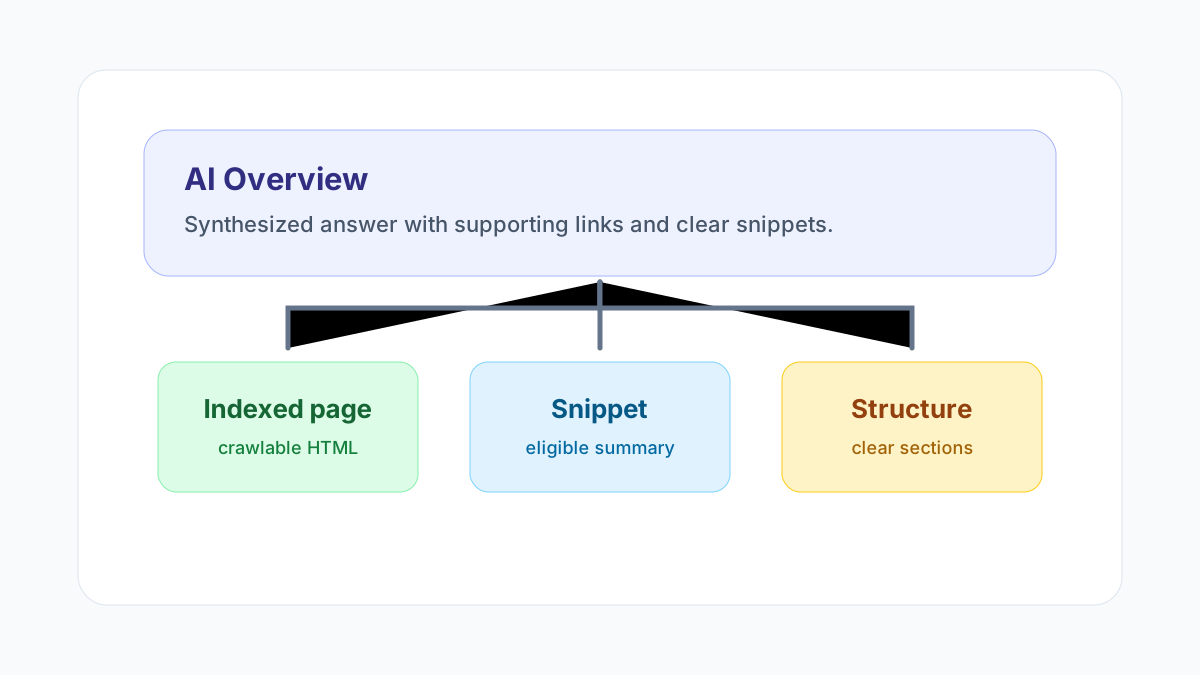
Google's AI features and your website guidance notes that pages need to be indexed and eligible for snippets to appear as supporting links in AI features. noindex, very restrictive snippet settings or crawler-hidden content reduce the chance of visibility.
The page must answer a task
AI Overviews often appear for complex questions. Pages that only repeat a keyword are weak sources. Better pages cover the user's full task: problem definition, decision criteria, examples, mistakes, data or experience and a next step.
If you write about AI visibility, “we measure AI visibility” is not enough. Readers need to know which models you measure, how often, which metrics you track and how to interpret changes.
Technical elements not to skip
Before special AI tactics, fix the basics: stable 200 responses, important content in HTML text, titles and descriptions that match the page, internal links to related guides, schema that matches visible content and inclusion in the sitemap.
These are not dramatic fixes, but they matter more in AI search because models need reliable, understandable input.
How to write for citation
A page that AI can use as a source should include specific statements, not only marketing claims. Instead of “we are the most advanced”, explain what the product measures, how the score is calculated, which sources are used and what the method cannot prove.
Measure after publishing
After publishing, track indexing, Search Console clicks and AI visibility tests. If AI answers still cite competitors, compare which proof is stronger on their side: definitions, comparison pages, case studies, data, domain authority or clearer structure.
The goal is not just more pages. The goal is less ambiguity for the user and the model.