AI Citations and Sources: How to Build Pages Models Trust
AI assistants use sources more often when they are clear, verifiable, connected and consistent with other public evidence.
Peter piše o SEO, AI vidnosti in tem, kako podjetja merijo prisotnost znamk v AI odgovorih.
Citations are the evidence layer
When an AI assistant answers a buying or expert question, it often combines information from several sources. Citations show which sources were clear, accessible and trustworthy enough to support the answer.
For a brand, this matters because a mention without evidence can stay shallow. If the model knows the company name but cannot find good proof, it may repeat outdated facts, omit key strengths or cite competitors.
What makes a source useful
A useful source is not always the longest article. It is often a page that answers a specific question clearly and includes enough context to be summarized. Strong sources have clear titles, definitions, examples, data or methodology, links to related pages, author context and dates when freshness matters.
Owned and external sources work together
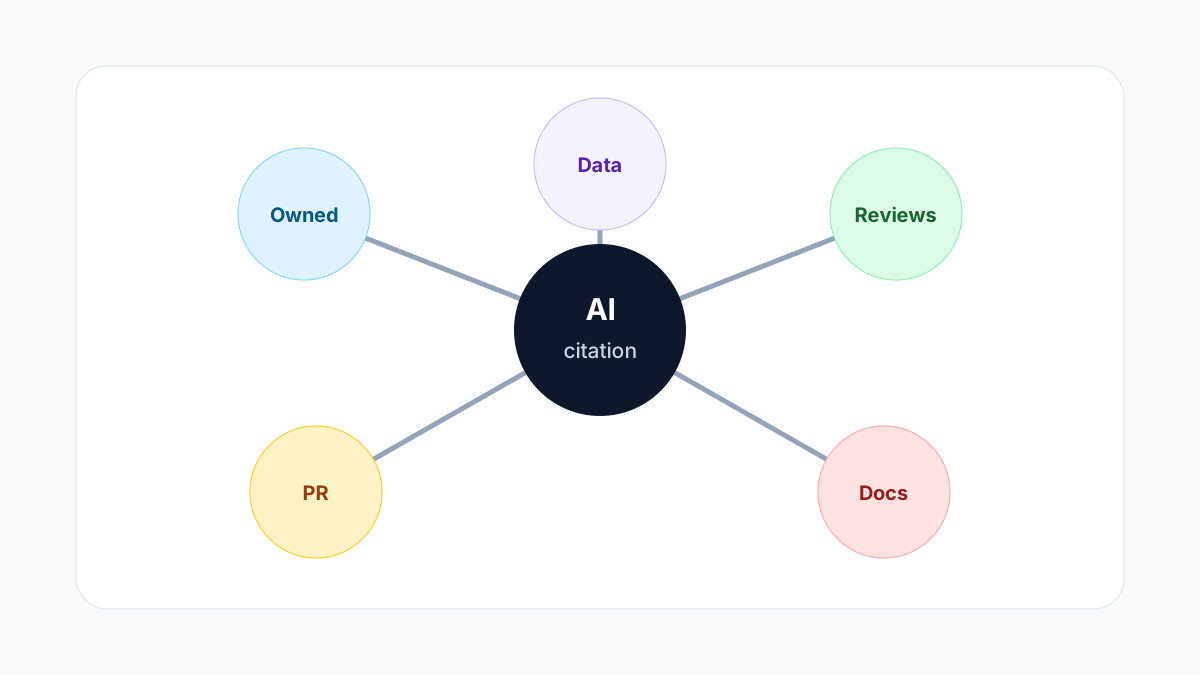
Owned content is the foundation, but not the only signal. AI answers may use directories, media, partner pages, docs, review platforms and public profiles. If descriptions differ across those sources, the model receives mixed signals.
How to build more citable pages
Start with prompts where AI currently cites competitors. Review which pages repeat and identify the pattern. Competitors may have better definitions, clearer comparisons, case studies, pricing information or stronger documentation.
Then create a source that answers the same task more clearly and with better proof.
Measure citations
Track which domains models cite, what share of citations points to your domains, which prompts produce supporting links and whether citations lead to relevant pages. The goal is not only more citations, but better citations.