How to Write Content AI Assistants Can Understand and Summarize
AI assistants use content better when it is specific, structured, evidenced and written for real user tasks.
Peter piše o SEO, AI vidnosti in tem, kako podjetja merijo prisotnost znamk v AI odgovorih.
AI does not need more text. It needs more clarity.
Many companies respond to AI search by publishing more articles. Quantity alone is not the solution. Google's generative AI guidance emphasizes helpful, reliable and non-commodity content. A page should add something beyond a rewrite of common knowledge.
Start with the user's task
Before writing, ask what the reader should be able to do better after the page: choose a tool, understand a risk, compare options, prepare an internal business case or set up measurement.
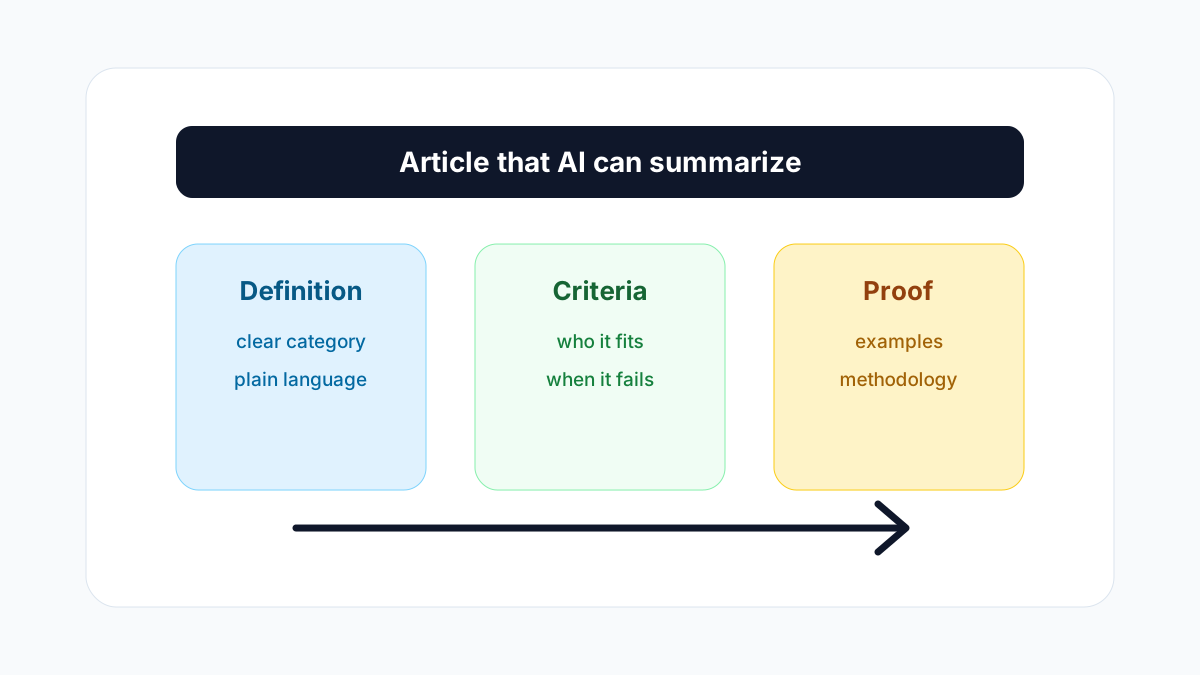
A page with a clear task is easier to structure and easier to summarize. The title, introduction, headings and conclusion become a map. AI systems can more easily identify definitions, criteria and recommendations.
Write answers, not slogans
AI assistants summarize information. A page should contain sentences that answer important questions on their own. Slogans have a place, but they cannot replace explanation.
Instead of “we revolutionize analytics”, explain which metric you measure, where data comes from, how often it updates, which decision it supports and what the limitations are.
Use structure that supports understanding
Strong pages use short section introductions, clear H2 and H3 headings, lists of criteria, before-and-after examples, FAQ sections, internal links to deeper explanations and author or methodology context.
This is not “writing for robots”. It is good editorial work.
Add first-hand experience
If everyone repeats the same definitions, a model has little reason to choose your source. Add evidence from practice: what you see with customers, which mistakes repeat, which prompts produce useful insight and how different models respond.
End with a next step
AI traffic matters only when the reader knows what to do next. Add a relevant tool, checklist, template or next guide. For AI Visibility Radar, that might be a free visibility check or a guide to choosing prompts.